
In this guide
Build the character you want to play
Use the Playworlds character creator to turn your concept into a level-one D&D 5e sheet. Start with the profile, choose ancestry and class, then review abilities, background, equipment and spells before saving. The mechanical choices happen in the builder; this guide focuses on motivations you can express through play.
Sign in with Google or Discord to play and save, and return with the same account to continue. Check the current credit and access information in the game. The examples below are original fictional concepts you can adapt, not character presets or recorded gameplay.
Connect the character to a problem
A compelling character does not need a novel-length backstory. Start with a current problem. Perhaps a former city watch recruit has lost a witness, or a travelling musician carries a message they cannot read. The best starting problem gives the character a reason to speak to strangers and accept help.
Add one personal connection: a mentor, sibling, rival, or former employer. Decide what the character wants from that person. This turns background information into a relationship that can influence a choice during play.
Choose a role you want to play at the table
Think about the actions you enjoy describing. Do you want to negotiate, investigate, protect companions, or use magic creatively? Choose the available class and background that support those actions, then review the character creator’s explanations before committing to equipment and spells.
A party role is broader than combat. A cautious observer can ask the question everyone missed. A proud defender can take responsibility for a difficult promise. Give your hero something to contribute when there is no enemy in the room.
Make equipment and appearance tell the same story
Select practical equipment for the adventure, then add one memorable visual detail. A repaired shield suggests a different history from a ceremonial one. Keep the portrait description focused on a few recognizable features rather than an inventory of everything the character owns.
Review the finished sheet before starting. Check the character’s name, chosen options, and any required selections. A portrait helps you picture the hero, but the sheet and the actions you take establish what the hero can actually do.
Give the first scene a decision
Finish the concept with a question the opening scene can test. Will the character spend their last coins helping a stranger? Will they reveal a useful secret to a potential rival? Questions like these create roleplay without requiring the narrator to know a long hidden history.
For example, a former guard searching for a missing partner might introduce themselves honestly at the gate, yet hide the fact that the disappearance was their fault. That tension gives the player several plausible approaches instead of a single predetermined personality.
Three backstories you can turn into a first quest
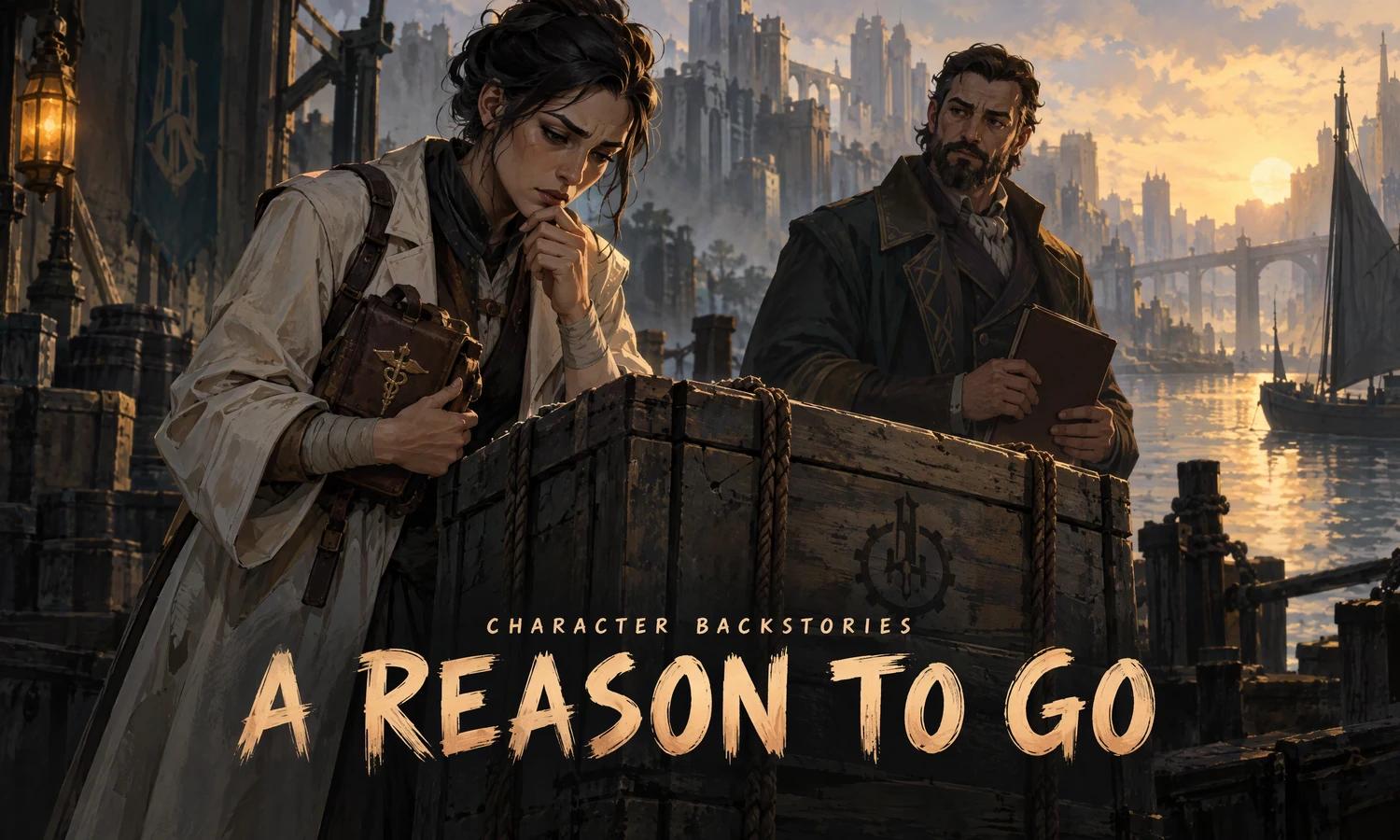
The indebted healer: Mara borrowed money from a river merchant to keep her village clinic open. Now the merchant wants her to examine a sealed cargo before dawn. Her goal is to repay the debt; her boundary is refusing to harm a patient. First move: ask who packed the cargo and why the usual healer refused. The quest begins with an obligation, not a predetermined betrayal.
The disgraced scout: Iven once led a patrol down the wrong trail and still carries the missing captain's compass. A stranger offers news of the captain in exchange for a guide through the marsh. His goal is to learn what happened; his boundary is not abandoning another traveler. First move: ask the stranger for one detail only the captain would know.
The apprentice archivist: Sela finds her own handwriting in a ledger dated before her birth. Her former tutor has disappeared, leaving a key with no address. Her goal is to find the ledger's origin; her boundary is preserving evidence even when it is embarrassing. First move: compare the paper and ink with a dated record before accusing anyone.
Use a backstory that leaves room for play
Fill in this template: I used to ___; now I need ___ because ___; I trust or owe ___; I will not ___; my first question is ___. Keep each answer short. Give the narrator a relationship and an unresolved problem, then let the adventure decide how they develop.
A backstory does not grant extra abilities, equipment, or authority. Choose the options the character creator supports and use the visible sheet to check what your character can attempt. If a world conflicts with your idea, adapt the premise instead of assuming the game has accepted every detail.