
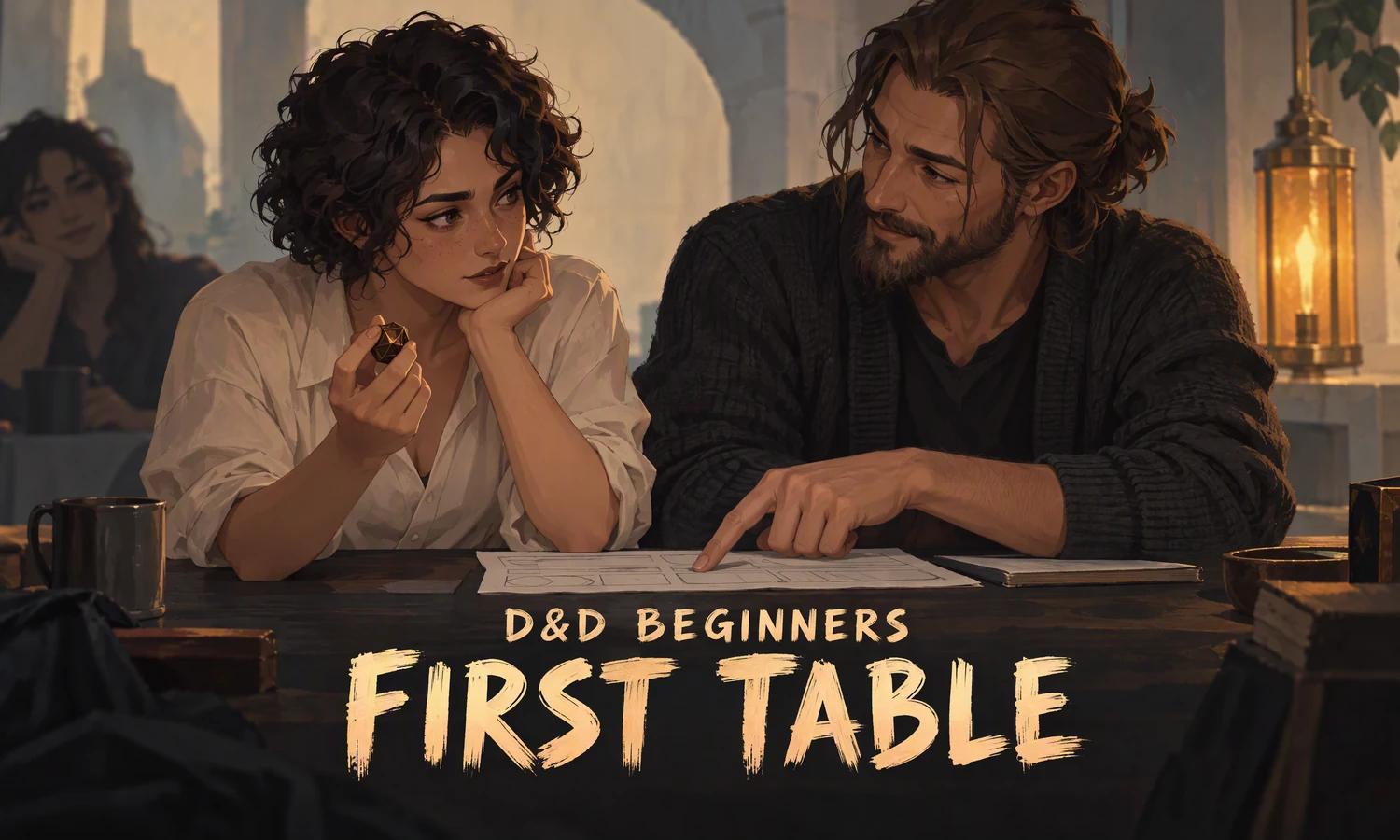
Your first D&D group should give you room to learn. You should be able to ask what a roll means, take a moment to find something on your character sheet, and describe an idea without already knowing the rule that handles it.
When you search for beginner D&D LFG listings, look for practical support: help preparing a character, an explanation of the tools, and clear expectations for the first session. “Beginners welcome” is a useful starting point. A short conversation tells you what that welcome includes.
Start with a smaller commitment
A one-shot is an adventure intended for a single session, though you should confirm the planned duration with the organizer. It gives you a chance to experience the game before committing to a recurring campaign.
A short campaign can also work well if you want time to become comfortable with the same people. Ask how many sessions are planned and whether the schedule is fixed.
If you prefer to join an ongoing campaign, find out how the group introduces new players. A brief recap, a clear character connection, and someone willing to explain the tools can make entering an established story much easier.
Search for teaching support
StartPlaying’s help center documents a Beginner experience filter. Its Learn to Play D&D filter combines beginner experience, a one-shot format, and D&D 5e using 2014 or 2024 rules. Those labels help narrow the search; read the individual listing to understand what the GM provides. StartPlaying’s beginner-game guide.
On any platform, ask what preparation the DM expects. A game may welcome new players while still asking you to create a character or learn the virtual tabletop beforehand.
You can send a simple message: “This would be my first D&D game. Is there help with the character sheet and online tools, and what should I prepare before the session?”
Ask these five questions before joining
1. Which rules are we using?
Ask whether the table uses the 2014 rules, the revised 2024 rules, or a particular combination with house rules. Then ask which character-building instructions to follow.
You do not need to master the differences before applying. You need to avoid spending an evening building a character that does not fit the table’s choices.
2. Can I use a pre-generated character?
A provided character can let you focus on playing. If you want to create your own, ask whether the DM can review it before the session.
Bring a simple motivation: “My character wants to find their missing mentor” or “They need work and refuse to abandon a companion.” Leave room to connect that motivation to the adventure.
3. What do I need to install or buy?
Confirm the required accounts, software, audio setup, and any costs. For paid games, read the total price and current cancellation terms before booking. For free games, still ask whether any tools or materials are required.
Use the organizer’s checklist rather than buying several books before you know what the game needs.
4. How long is the session?
Ask for the end time as well as the start time. Check whether character setup happens during the game or requires a separate meeting.
Confirm the next session in your own time zone. If you have a firm stopping time, explain it before accepting the seat.
5. How does the group handle questions?
Ask whether it is fine to pause for a rules explanation and how to get help without interrupting another player’s scene. You are looking for a clear, welcoming answer.
You might also ask whether one experienced player can help you locate actions on the sheet during your first combat.
Use session zero to understand the table
Session zero is a conversation before the campaign about what everyone wants from the game. D&D Beyond’s guidance includes expectations, unwanted content, and character creation as topics the group can discuss together. D&D Beyond’s session-zero guidance.
For a new player, useful things to settle include tone, cooperation between characters, how to raise a concern, and what happens when someone misses a session. You can express a boundary without giving a personal explanation.
If you are joining an existing group, ask for a shorter version of that conversation. The others may already understand the table’s habits, but you still need an introduction.
Prepare a little, then play
Before the first session, test the required tools and open your character sheet. Locate the information the DM asks you to use. Write down your character’s name, their reason for joining the adventure, and one question you want to ask.
During play, describe what you want to do in ordinary language: “I want to distract the guard so my friend can get past.” The DM can explain what happens next and whether a roll is needed.
Give other players time to contribute. You can participate thoughtfully without performing an accent or having an answer ready for every scene.
For a low-pressure way to explore roleplaying before your first group session, you can try Playworlds on your own. Practice describing what your character wants to do and responding to the story. When you join a human-run table, follow that DM’s rules and leave room for the other players’ ideas.
Decide whether you want a second session
Afterward, ask yourself: Did I get chances to act? Could I ask questions? Did the tone suit me? Can I keep the schedule?
One confusing rule or awkward introduction does not tell you everything about a group. If you enjoyed the session, tell the DM what helped and what you still need explained. If the table does not fit, thank them and continue searching.
For your next application, use the player LFG template. To compare places to look, read how to find a D&D group.