In this guide
A missed shot can still change the scene
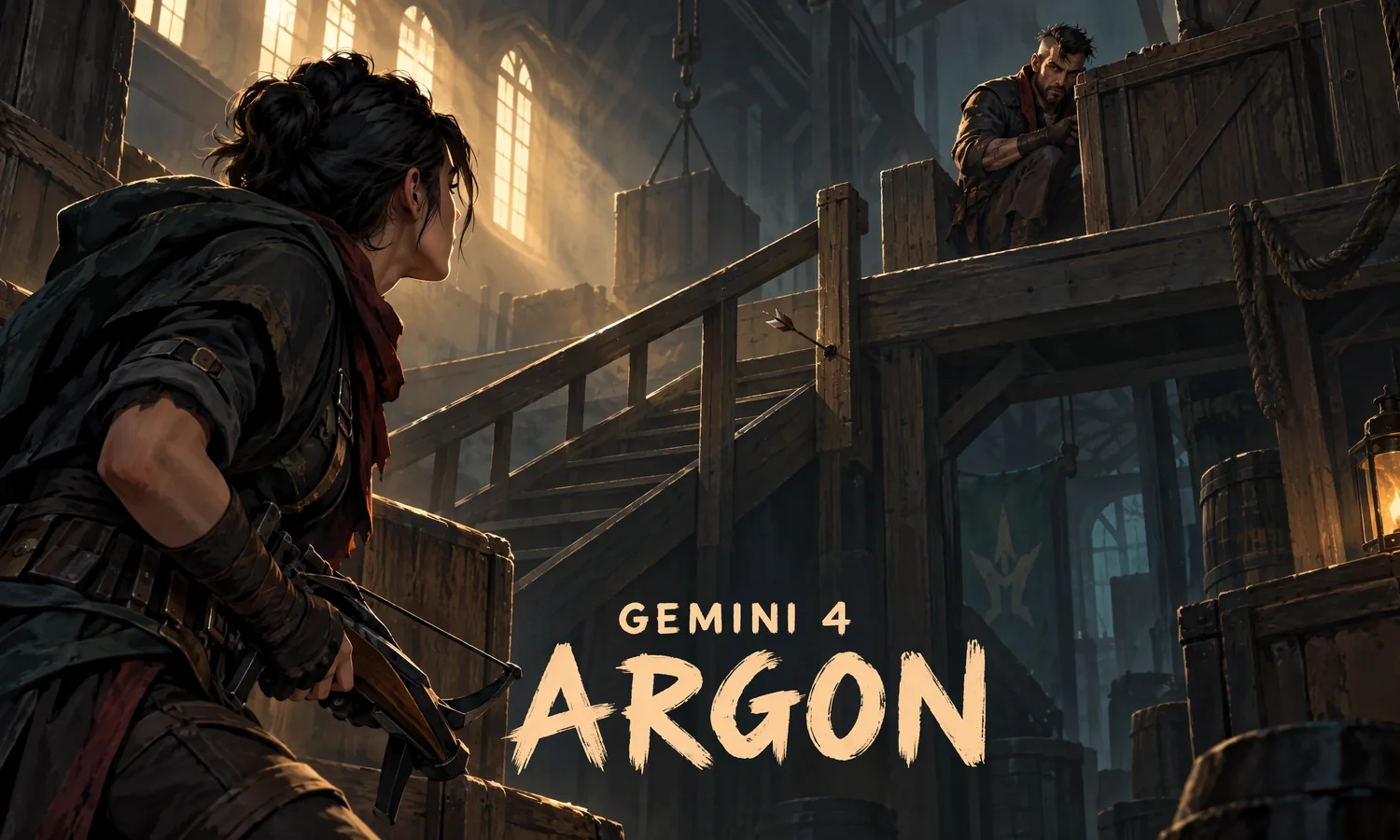
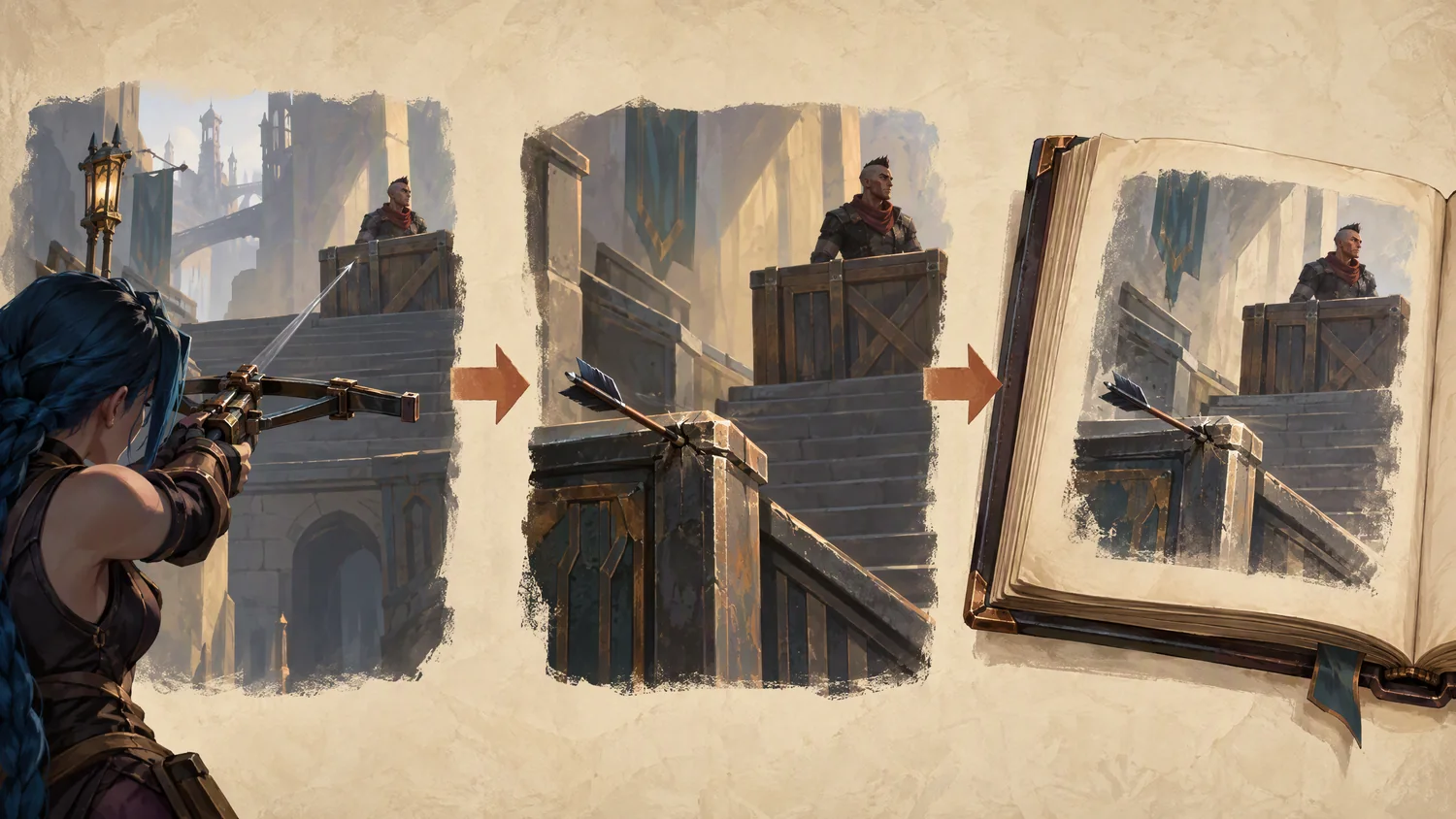
You fire at a raider crossing a warehouse gantry. The resolved result is a miss; the raider remains on the walkway and takes no damage. A useful narrator might write: “Your bolt strikes the railing beneath his hand. He drops behind a crate, still blocking the stair.” The sentence makes the position clear without awarding a hit.
This is original illustrative prose, not a Gemini 4 Argon transcript. In an AI RPG, action writing has a stricter job than making a battle sound exciting: the reader must understand what happened, what remains possible, and whose decision comes next.
Where Argon could improve the telling
Google’s October 13 release reports stronger style following and less repetitive writing for Argon than for previous Gemini models. Those claims make it worth testing concise action prose with varied rhythms. They do not establish correct combat adjudication, faster turns, or higher-quality RPG fights.
Give narration a narrow brief: name the actor, show the accepted consequence, and establish the remaining danger. A short movement beat suits a quick exchange; a major reversal can take more space. Avoid repeating a full inventory, explaining every rule, or turning each attack into the climax of the campaign.
Resolve the action before writing its consequence
For the gantry example, start with the player’s attempt: shoot the raider. Then use the agreed game resolution: miss, zero damage, raider still above the stairs. Finally ask the narrator to express that accepted result. A dramatic description must not add a fall, a disarmed weapon, or a destroyed support unless the game has actually resolved that change.
Keep consequential positions and resource changes in the game record. If the next turn depends on cover, elevation, or access to the stairs, state it plainly. This three-step sequence is a proposed writing workflow, not a new Playworlds feature or proof that a particular model follows it reliably.
A combat narration prompt and a useful stress test
Try: “Narrate only the supplied resolved outcome. Use clear spatial language and two to four sentences. Preserve hit or miss, damage, resources, and positions exactly. Describe one sensory consequence grounded in that outcome. End with the immediate situation and wait for my action. Do not invent another attack or choose what my character does next.”
Test a miss, a retreat, and a victory that leaves a hostage in danger. Check whether all three remain legible without escalating every beat. If the narrator turns a miss into an injury or declares the hostage rescued, record a correction. Compare completed exchanges at similar response lengths; do not judge only the most spectacular paragraph.
Play for a tactical choice worth describing
Manually build a warehouse premise in Playworlds Custom World: a blocked stair, an elevated raider, and cargo that must reach the dock. Give your character an intention such as “I use the stacked crates as cover while looking for another way up.” Let the game resolve the attempt before deciding what changed.
This article researches Argon as a narration candidate. The reviewed new-adventure policy offers Standard and Pro, so use the choices currently shown in the game. No combat rule or provider setting is changed by this guide. The writing succeeds when you can picture the danger and choose your next move.