In this guide
The narrator has to earn your next move
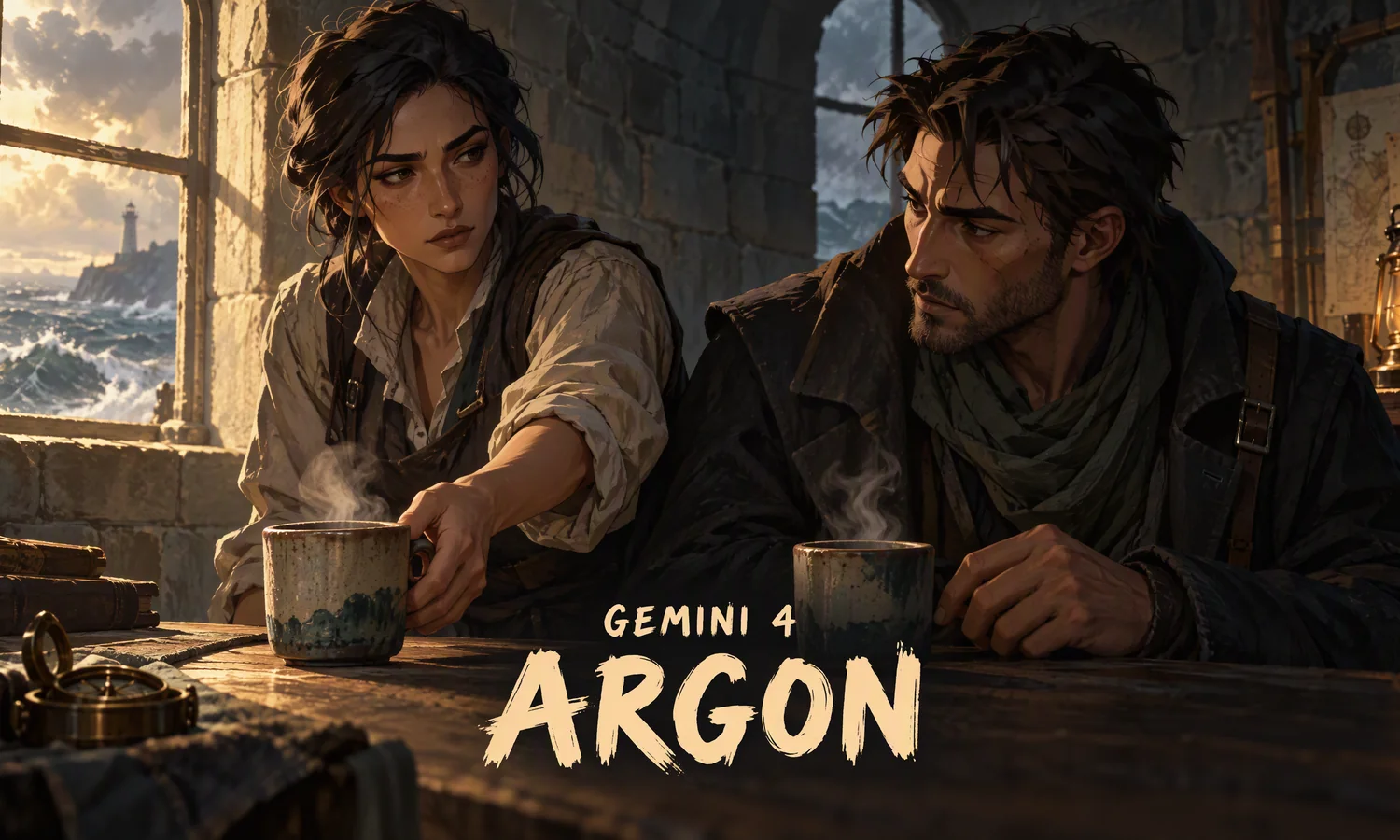
The lighthouse keeper sets two cups on the table. One is still warm, although you were told nobody has visited since the storm. She asks whether you came for shelter or for the missing boat. A good RPG opening gives you a detail to investigate and leaves the decision yours. Beautiful prose is useful when it makes that decision clearer.
Gemini 4 Argon is a serious candidate for this work. Calling it the best narration model requires more evidence: can it sustain character voices, respect discovered facts, and make failure interesting across an encounter? The scenes here are original editorial examples, not Argon transcripts or measured comparison results.
What the current Argon research supports
Checked November 1, 2026, Google’s October 13 release describes improved writing, stronger adherence to style instructions, and less repetition and cliché than earlier Gemini models. Those provider-reported strengths fit restrained scene description and distinct dialogue. They do not demonstrate that Argon wins an RPG narration comparison.
Google’s developer announcement confirms access through the paid Gemini API. Its October 13 release describes a one-million-token unified input-output limit; that is a capacity limit, not persistent campaign memory. Google announced the newer Gemini 4 Carbon on October 28. Neither launch establishes which model tells the most satisfying playable story.
Judge a complete encounter
Give each accessible model the same lighthouse facts: the boat is missing, the second cup belongs to a visitor, and the keeper wants to protect that visitor. Ask the same opening question, attempt a risky search, resolve one setback, and return after a scene change. Keep response lengths and instructions comparable. Hide model names when asking readers which version they prefer.
Check five things: whether the clue is actionable, speakers remain distinguishable, established outcomes survive, the player retains control, and the next decision is clear. Record corrections and time to a usable response alongside preference. Repeat with another genre before choosing. This is a proposed test, with no scores or winner claimed.
Writing quality and game availability are separate
An RPG narrator interprets accepted outcomes into a scene. Game rules, saved resources, and discovered evidence still need an authoritative record. A clever metaphor cannot justify opening a locked door after the agreed result says it remains shut. Argon’s writing potential is most useful when it works within those boundaries.
For Playworlds, the reviewed configuration retains an Argon narration route for supported saved configurations, while the current new-adventure policy offers Standard and Pro. This article does not enable an Argon selector or establish live model performance. Use the choices shown in your game; provider API access and Playworlds availability are different things.
Try the lighthouse premise in Playworlds
In Custom World, enter a storm-bound lighthouse, a missing boat, and a keeper protecting an unknown visitor. Give your character a reason to find that boat. Begin with “I ask who used the second cup, while watching whether she moves to hide it.” Copy the premise yourself; the link does not transfer it into the creator.
The best narrator for your RPG is the one whose writing keeps this choice meaningful through the next scene. Argon’s documented style improvements justify a careful trial, while a finished encounter provides the evidence to choose. For reusable starting instructions, continue with our Argon narration prompts.