
In this guide
Choose a scene contract before a writing style
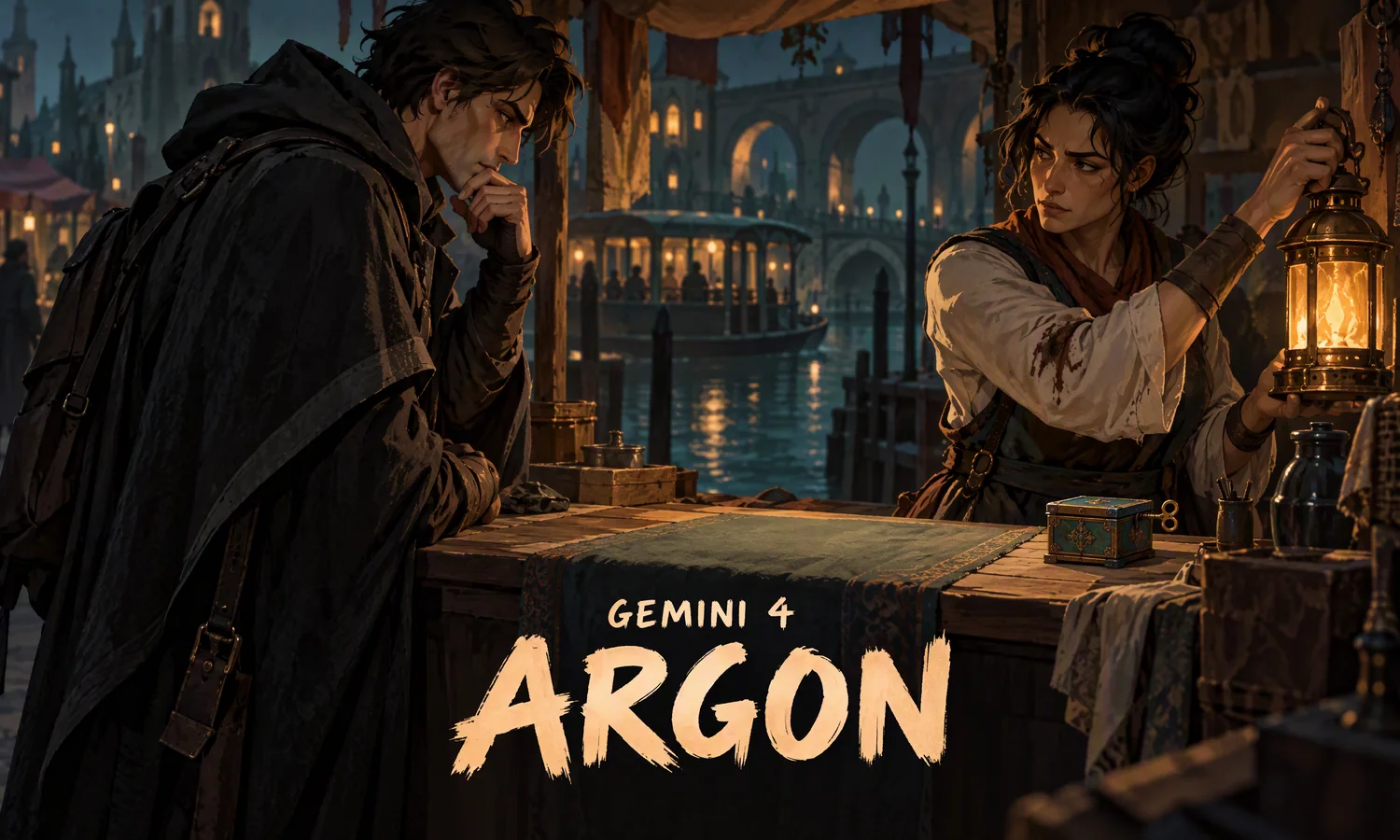
A lantern goes out in a crowded night market. When it is relit, the parcel you were guarding is gone and the vendor’s sleeve smells of lamp oil. Mystery, swashbuckling adventure, and quiet character drama could all begin here. The facts can stay fixed while the rhythm and emphasis change.
The following prompts are original editorial material for testing a model you can access, including Gemini 4 Argon. They are not benchmark prompts, model outputs, or a claim that one instruction guarantees good play. Google reports improved Argon style following in its October 13 release; these exercises turn that claim into something a reader can examine.
Mystery: leave one clue available to investigate
Prompt: “Run a night-market mystery. My guarded parcel disappears during a brief blackout. Establish one concrete sensory clue and one person with a reason to avoid a question. Keep the culprit’s identity hidden until supported discoveries reveal it. Use precise, restrained prose. Stop after describing the immediate situation so I can choose how to investigate.”
Begin with “I ask the vendor to show me the lamp while I watch their hands.” A useful reply gives an observable response without declaring the vendor guilty or revealing the solution. If every question produces a confession, the mystery has lost its work. Track discovered evidence separately from the narrator’s hidden scenario facts.
Adventure: let momentum come from visible stakes
Prompt: “Run the same market scene as a brisk adventure. The departing canal ferry may carry my missing parcel. Show the distance, the crowd, and one plausible obstacle. Use active verbs and brief dialogue. Accept alternative plans when the established situation supports them. Resolve uncertainty through our agreed rules; never declare that I chase, jump, or attack before I choose.”
Try offering the ferryman a reward instead of pursuing the suspect. Does the narrator respond to the plan or force a rooftop chase anyway? Speed comes from a clear deadline and understandable options. It does not require a new explosion, an enemy ambush, and a secret prophecy in every response.
Quiet drama: give a small gesture room to matter
Prompt: “Run the market scene as a quiet character drama. The missing parcel held a repaired music box meant for someone I have disappointed. Let an NPC respond through a small action and a short line of dialogue. Avoid explaining my character’s emotions. Keep the loss unresolved, offer something I can ask or do, and wait for my decision.”
Open with “I ask the repairer whether they kept any spare parts.” A worn key placed on the counter can carry the scene if the player decides what it means. The narrator should not announce forgiveness or make your character cry. Emotional depth grows when a response offers space rather than claiming the player’s inner life.
Revise one thing, then bring the premise into play
After trying a prompt, change one instruction: shorter replies, fewer metaphors, or more visible spatial detail. Replay the same action and compare clarity, voice, and freedom to act. Keep a note of contradictions and corrections. The goal is a repeatable style that helps you play, not a longer list of adjectives in the prompt.
In Playworlds Custom World, manually enter the night market, stolen parcel, and the version’s personal stakes. The link does not prefill the premise or select Argon. The current new-adventure policy reviewed for this article offers Standard and Pro; use the available choices. Start with your own action and judge how well the next scene answers it.