
In this guide
A quest should survive an unexpected offer
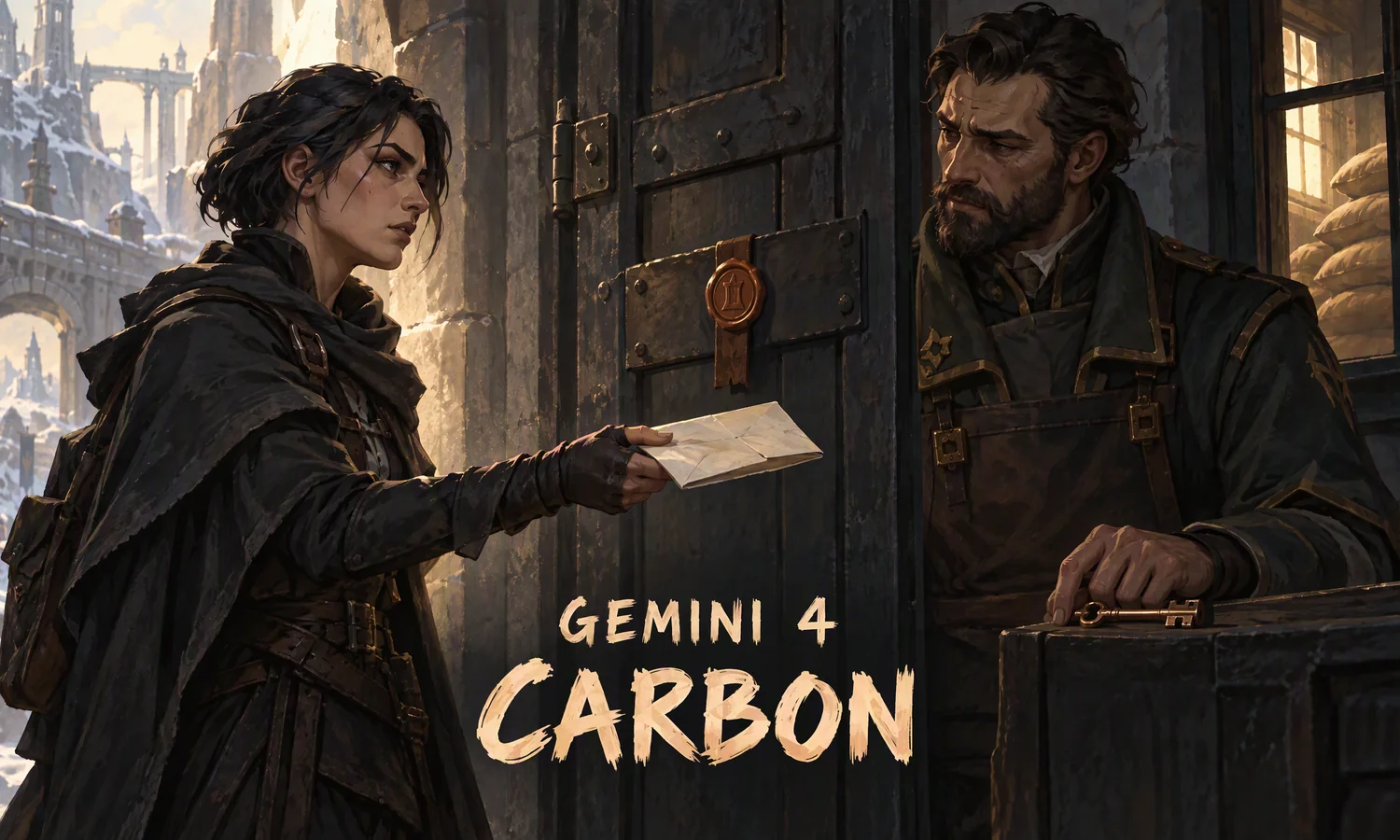
The city’s winter stores are sealed behind a disputed warehouse order. You were hired to steal the key, but instead offer the quartermaster a public inspection. A useful game master can follow that proposal: who benefits, who objects, and what evidence could change the decision? It should not quietly force you back to the planned burglary.
Gemini 4 Carbon is an interesting candidate for this kind of flexible play. The warehouse scene is an original design example, not a Carbon output. This article examines an announced model and possible RPG uses; it reports no hands-on Carbon game test or Playworlds integration.
What Google announced, and what is still coming
Checked November 1, 2026, Google’s October 28 announcement emphasizes stronger sustained reasoning, coding, and agentic work. It describes initial Carbon access for selected cyber defenders, followed by additional trusted partners. Broad access for developers, businesses, and consumers is described as coming soon, without a firm date on that page.
That makes Carbon an upcoming candidate to evaluate, rather than a model every reader can select today. The cited announcement centers on engineering and cybersecurity. Its results do not measure improvisation, memorable NPC dialogue, campaign continuity, or the enjoyment of an RPG encounter.
Translate reasoning into a playable decision
For the warehouse, keep three pieces of information distinct: the stores are sealed, the quartermaster fears a shortage, and a merchant has falsified a delivery count. A narrator can present a tense inspection without revealing the forgery before the player uncovers evidence. Deeper planning is useful only if those boundaries remain intact.
A plausible response to the inspection offer is a counterproposal: the quartermaster will open one store if a neutral witness attends. That creates another action for the player. It does not decide that you accept, invent proof of the merchant’s guilt, or mark the quest complete. These are proposed design standards, not demonstrated Carbon capabilities.
A useful first test when you gain access
Run the same premise through a model you can access, then save the setup for a future Carbon trial. Try negotiation, investigation, and a failed attempt to enter the warehouse. Check whether each produces a clear next decision while preserving the accepted facts. Keep a note of corrections and the wait for a usable reply.
Use this original instruction: “Run the sealed winter-store dispute one scene at a time. Respond to my proposed plan. Keep hidden facts hidden until discovered, honor resolved outcomes, and stop before choosing my next action.” Judge the completed encounter; an impressive explanation of the plot is not the same as a satisfying session.
Start the adventure before the model arrives
In Playworlds Custom World, manually enter the winter stores, the disputed order, and the merchant’s questionable delivery. Give your character a reason to protect the city before the first snowfall. Open with “I ask the quartermaster what evidence would justify an inspection.” The link does not prefill the premise.
The reviewed Playworlds new-adventure policy offers Standard and Pro; Carbon is not an available choice in that configuration. You can develop the adventure with the current game, then revisit the model question when access and RPG evidence exist. Keep your recorded decisions as the reference for any later comparison.