
In this guide
Choose the next scene, not just the newer name
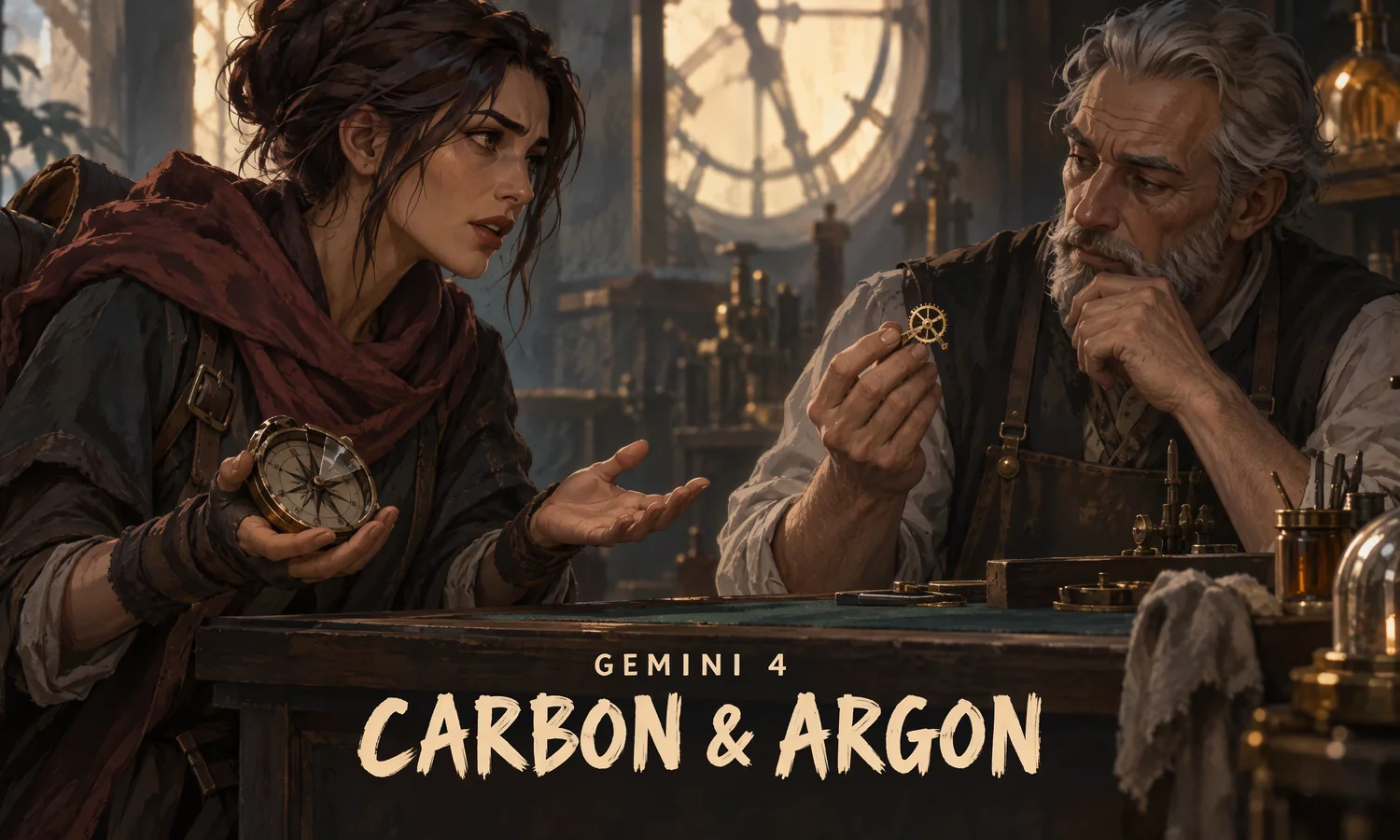
A watchmaker offers to repair your broken compass if you recover a stolen escapement. You propose borrowing a replacement instead. A good narrator can explain the price of that compromise without declaring that you accept the original quest. This small exchange can reveal more about RPG fit than a model’s newest benchmark headline.
Gemini 4 Carbon builds on Argon, but that alone does not establish better narration. This comparison separates the documented access situation from the gameplay tests still needed. The watchmaker is an original editorial scenario; there are no Carbon or Argon outputs, preference scores, or measured session costs here.
Availability is the first practical difference
Checked November 1, 2026, Google’s October 13 developer announcement confirms Argon access through the paid Gemini API. Its October 28 Carbon announcement describes phased access for selected cyber defenders and trusted partners, with broader developer and consumer availability coming soon. That page supplies no firm public release date.
If you already have an accessible narrator that works, keep a useful baseline rather than delaying every adventure for Carbon. When access arrives, check the current provider documentation and the exact configuration you can use. Access to either Google model does not automatically make it selectable inside another game.
A capability lead is not an RPG verdict
Google’s Carbon announcement emphasizes engineering and agentic gains over Argon, alongside internally reported reductions in unsupported claims. Those findings make consistency worth testing. They do not establish better NPC voices, fairer failed rolls, or a more enjoyable watchmaker encounter.
Look for observable play: does the watchmaker answer the borrowing proposal, keep the stolen part undiscovered, and remember what you owe after a return visit? Compare restrained descriptions and distinctive dialogue at similar lengths. A newer model may be useful for some tasks while your preferred narrator remains better suited to the style you enjoy.
Compare the whole encounter, including waiting and corrections
Use identical setup facts, style instructions, and resolved outcomes. Run the offer, an investigation, a failed attempt, and the return to the shop. Hide model labels when readers compare the completed stories. Record contradictions, corrections, and time until the player can make the next decision, not only time until the first token appears.
Google announces matching introductory token rates for Carbon and Argon, but equal rates do not imply equal encounter cost. Context volume, output length, billed reasoning, caching eligibility, and retries can change the total. Check current terms when testing. Provider API rates are separate from Playworlds credits, and this article quotes no player price or measured saving.
Keep a playable baseline in Playworlds
Manually create the watchmaker’s shop, missing escapement, and broken compass in Playworlds Custom World. Begin with “I ask what guarantee would make you lend me a replacement.” The link does not prefill the scene, change an existing save’s model, or select Carbon.
The reviewed new-adventure policy offers Standard and Pro. Carbon is not integrated in the reviewed game configuration; retained Argon configurations are not a promise of a new-adventure selector. Use the choices shown now. A future switch should earn its place through a better completed encounter, acceptable waiting, and a cost you have actually measured.